
Kel-Suu: Reaching Kyrgyzstan's Wildest Lake (2026)
How to reach Kel-Suu lake in 2026: the border-zone permit and how far ahead to arrange it, the 4x4 route through Naryn and At-Bashy, yurt camps in the Kok-Kiya valley, and the final approach by horse or on foot. An honest guide from the WeRent team.

Every country keeps one landscape at the very bottom of the bag, the one that asks something of you before it shows itself. In Kyrgyzstan that place is Kel-Suu - a turquoise lake pinned between sheer limestone walls at roughly 3,500 m in the Naryn region, so close to the Chinese frontier that visiting it means entering an official border zone. It looks like a Norwegian fjord that wandered into Central Asia, and it is photographed far more often than it is actually reached, because the trip demands four things most lakes do not: a border-zone permit arranged in advance, a genuine 4x4, a night or two in yurts with no services of any kind, and a final approach on horseback or on foot. This guide walks through all four, in order. Updated for August 2026.
A word of honesty before the romance: we at WeRent hand over cars in Bishkek and Osh, and Kel-Suu is the single most demanding trip our customers plan. It is also, by their own account at the return counter, the one they talk about longest. If Song-Kul is a step up from the Issyk-Kul ring, Kel-Suu is a step up from Song-Kul - higher, emptier, further, and with paperwork. None of it is difficult; all of it must be done in the right order.
The permit comes first
Kel-Suu sits inside the restricted zone along the border with China, and foreigners need a border-zone permit to pass the military checkpoint on the way in - no permit, no lake, and the soldiers at the barrier are not moved by how far you have driven. The permit is tied to your passport details and is normally arranged through a tour agency or a CBT (Community Based Tourism) office; the CBT branch in Naryn is the classic route, and many yurt camps will sort the paperwork when you book a bed with them. Allow about a week for processing - this is the one part of the trip you genuinely cannot improvise on arrival, so start it before you land in the country if you can. Bring the passport you applied with, keep it reachable in the car, and expect it to be checked at the post. The rest of the border-zone etiquette is exactly what our safety guide describes: documents in order, cameras away at the checkpoint, and no drama whatsoever.
The road: Bishkek to the Kok-Kiya valley
This is genuine 4x4 territory - not the "an SUV is more comfortable" kind we say about gorge roads, but the "a sedan will not make it" kind. The journey breaks into three distinct chapters, and the character of the road changes completely at each seam:
- Bishkek to Naryn - a long day of proper asphalt over the Dolon pass, about 300 km. Naryn is the last real town on the route: the last reliable fuel stations, the last ATMs, the last shops with actual shelves. Treat it as base camp and top up everything - tank, cash, food, patience.
- Naryn to the checkpoint via At-Bashy - the asphalt thins, then gives up. At-Bashy is the last village of any size; beyond it the track climbs toward the military post where your permit and passport are checked against the list.
- Checkpoint to the Kok-Kiya valley - the real off-road: hours of rutted track, stream fords that swell with afternoon meltwater, no signs, no fences, and quite possibly no other vehicles. Navigate by downloaded offline maps and the yurt camp's directions; mobile coverage fades to nothing well before the valley.

Two practical notes on the driving itself. First, read our driving guide before you set out - the paved half of this route is ordinary Kyrgyz highway with ordinary speed cameras and police posts. Second, respect the fords: cross in the morning when the meltwater is low, walk any crossing you cannot read from the driver's seat, and if a ford looks angry, it is - wait or turn back. There is no tow truck out here and no phone signal to call one with.
Nights at Kok-Kiya: yurts and nothing else
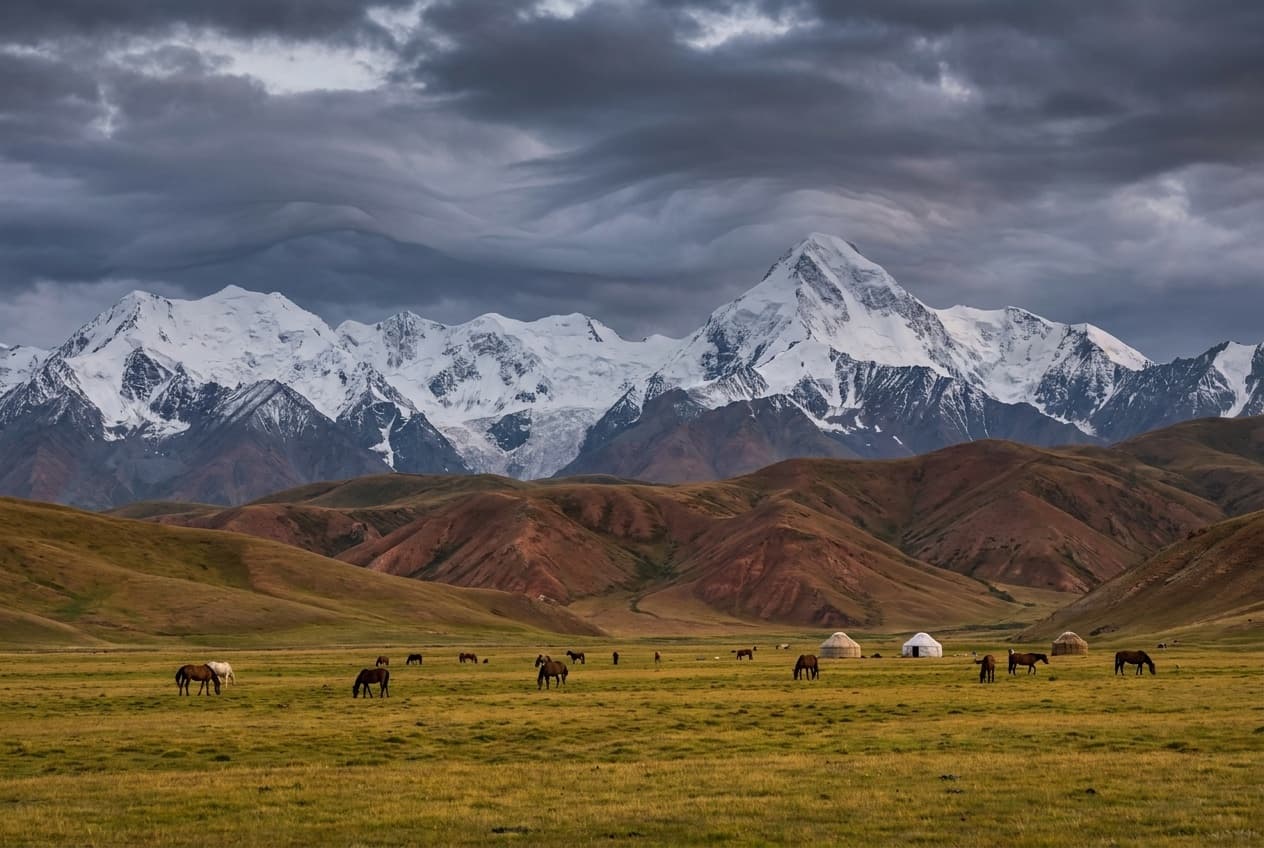
The Kok-Kiya valley below the lake is where you sleep: a handful of seasonal yurt camps run by local families, pitched at an altitude where August nights routinely dip below freezing. Dinner is cooked by the family, beds are thick stacks of blankets, and the toilet is a walk under more stars than most people have ever seen. What the valley does not have is everything else - no fuel, no ATMs, no shops, no mains electricity beyond what a solar panel provides, and for most visitors no phone coverage at all. Book your yurt in advance through the same agency or CBT office that handles your permit, tell someone your itinerary before you drop off the grid, and bring cash som for everything, including the horses.
The last kilometres: hoof or boot
From the yurt camps the car's job is done - the final stretch to the lake is closed to vehicles by terrain if nothing else, and you finish it the old way. Most visitors ride: the camps keep horses and guides, the animals know every stone of the trail, and no prior riding experience is expected - think of it as a slow, sure-footed armchair with opinions. Walkers can do the same route on foot in a few unhurried hours each way; at this altitude the air is thin enough that "unhurried" is not a suggestion but a physiological fact. Then the walls open, and the lake appears below you - a ribbon of impossible blue-green folded between cliffs, with the silence turned all the way up. One honest caveat: Kel-Suu drains through underground channels and its level swings from year to year and month to month, so the brimming turquoise of the postcards is not guaranteed on your particular day. Locals will know what the lake is doing this season - ask at the camp before you set your expectations.
When to go
The realistic window is July to September, full stop. Earlier, the tracks are mud and the fords are furious with meltwater; later, snow closes the high valley and the yurt camps fold up and drive home. Even inside the window, this is high-mountain weather - a warm noon, a hailstorm at three, a frozen puddle at dawn, sometimes all in the same day. August is the most settled month; early September trades a little warmth for empty trails and the first gold in the grass. Where this fits in the wider year - and what the rest of the country is doing while Kel-Suu is open - is mapped month by month in our best time to visit guide.
Kel-Suu: FAQ
Do I need a permit to visit Kel-Suu?
Yes - the lake lies in the restricted border zone near China, and foreigners must show a border-zone permit at the military checkpoint. Arrange it about a week ahead through a tour agency or a CBT office (CBT Naryn is the usual choice); many yurt camps handle it as part of a booking. Travel with the passport you applied with.
Can I drive all the way to the lake?
No. A proper 4x4 gets you to the yurt camps in the Kok-Kiya valley; the final stretch to the lake itself is done on horseback or on foot - a few hours each way at a calm, altitude-appropriate pace. The camps rent horses with guides, and no riding experience is needed.
Do I really need a 4x4 for Kel-Suu?
Yes, without qualification - this is one of the few destinations in Kyrgyzstan where four-wheel drive and real ground clearance are a requirement, not a comfort. Past At-Bashy the route is hours of rutted track and unbridged stream fords with no services and often no other traffic. Tell us it is a Kel-Suu trip when you book and we will point you at the right cars in the fleet.
How many days does a Kel-Suu trip take from Bishkek?
Plan a minimum of four days: one to Naryn, one from Naryn to the Kok-Kiya camps, a day for the lake itself, and the long drive back - five days is far more comfortable and leaves slack for weather. Add the week of permit processing before any of it, arranged remotely while you plan.
When is the best time to visit Kel-Suu?
July to September only - outside that window snow and mud close the valley and the yurt camps shut. August is the most stable month; early September is colder but emptier. Nights can freeze all season, so pack winter layers whatever the date, and remember the lake's water level varies - check locally what it is doing this year.
Is there fuel, money or phone signal near Kel-Suu?
No, none of the three. Naryn has the last reliable fuel and ATMs, At-Bashy the last village shops, and mobile coverage dies well before the Kok-Kiya valley. Fill the tank, carry cash som for the camps and horses, download offline maps, and tell someone your route and return date before you leave signal.
Kel-Suu is not an excursion; it is a small expedition with a lake-shaped reward at the end, and that is exactly why it stays wild while the rest of the country fills up. Do it properly: permit first, then a machine that belongs out there - pick a serious 4x4 from our fleet and tell us where you are taking it, so we hand you the right car and the right advice with it. If you want the full month, slot it into the southern leg of our 14-day itinerary, warm up on the Song-Kul tracks first, and save two nights for the silence at Kok-Kiya. The lakes get harder to reach in this country in exact proportion to how long you remember them - and Kel-Suu sits at the far end of both scales.
Planning a trip to Kyrgyzstan? Pick your car and drive worry-free.
Browse the fleetSimilar posts
Song-Kul by Car: Routes, Passes and Yurt Nights (2026)
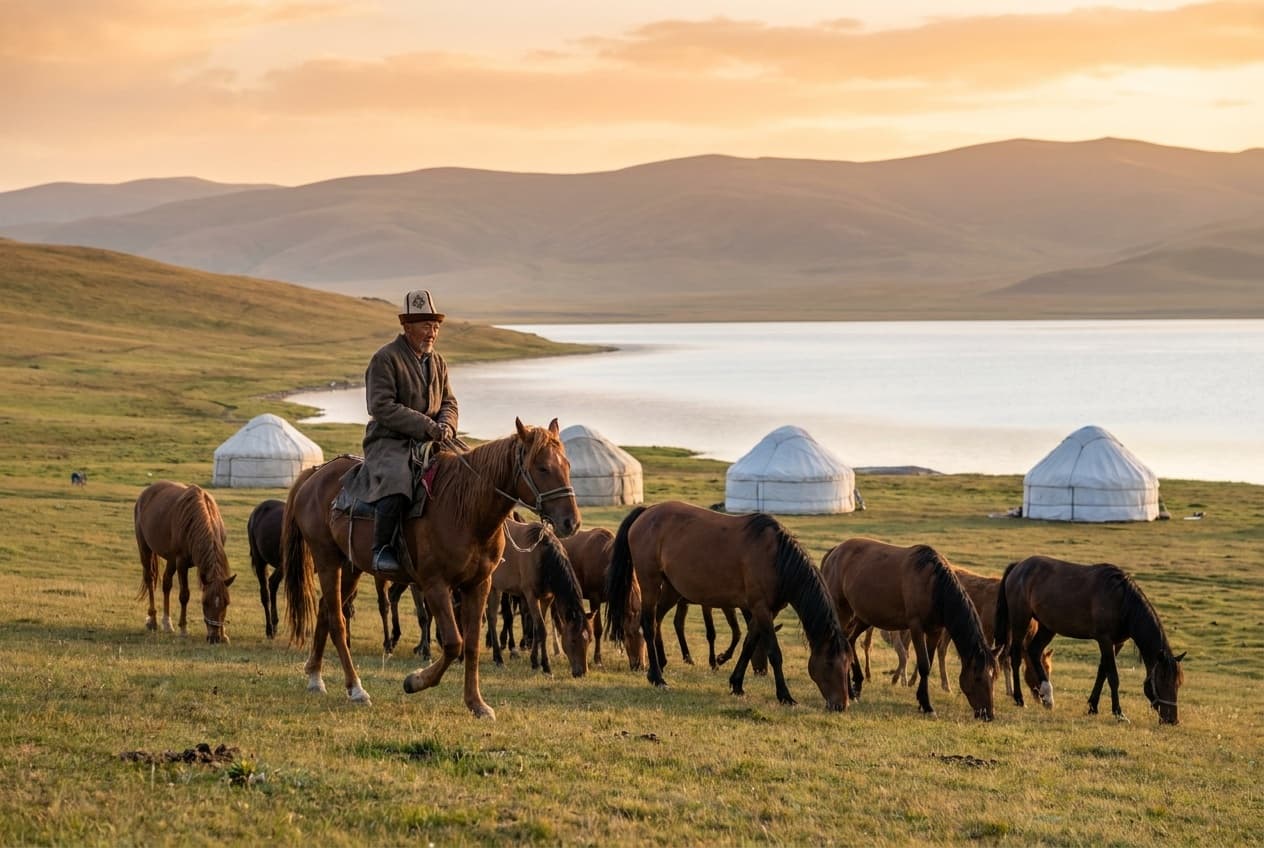
How to reach Song-Kul lake by car: the Kalmak-Ashuu and Moldo-Ashuu passes, when the road is open, why a 4x4 genuinely matters, staging in Kochkor, yurt-camp nights, altitude tips and a two-day plan from Bishkek.
Osh and the South: Sulaiman-Too, Arslanbob and the Alay Valley (2026)
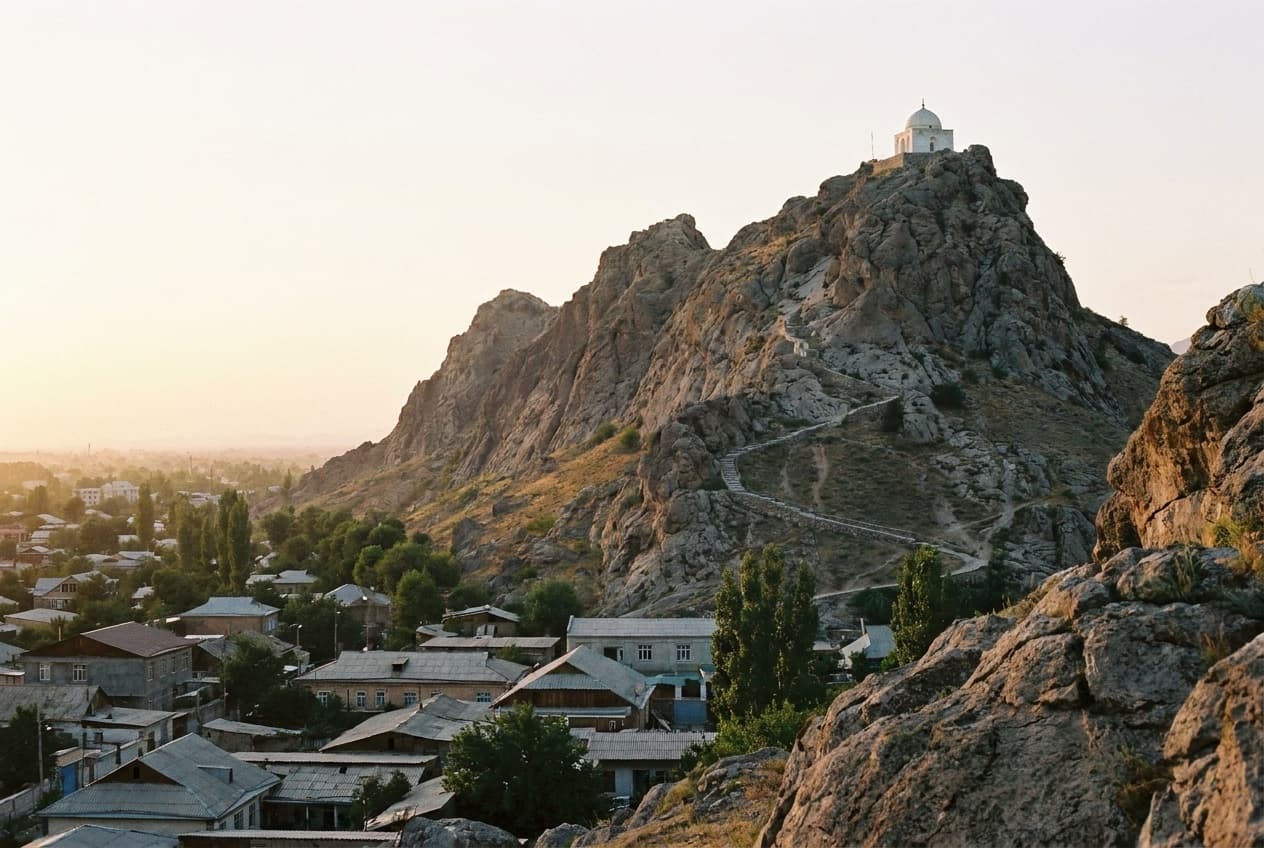
A driving guide to southern Kyrgyzstan: Osh and its UNESCO-listed Sulaiman-Too, the Jayma Bazaar, the Karakhanid minaret at Uzgen, the walnut forests of Arslanbob, and the Alay valley with Lenin Peak on the horizon - plus the fly-to-Osh-and-rent-there play.
Do You Need a 4x4 in Kyrgyzstan? Sedan vs SUV, Route by Route (2026)
Sedan or 4x4 for Kyrgyzstan? Route-by-route verdicts from the WeRent team: the Issyk-Kul ring, gorge roads, Song-Kul, Kel-Suu, the Alay valley and winter - plus an honest comparison of renting your own 4x4 versus joining an organized jeep tour.