
Is Kyrgyzstan Safe? An Honest Guide for Travelers (2026)
Is Kyrgyzstan safe to visit? Our honest on-the-ground answer: what the risks really are - petty crime, mountain roads, altitude - and what they aren't. Border-permit zones, solo and family travel, the emergency number, and why your own car actually makes the trip safer.

Tell friends you're going to Kyrgyzstan and watch the reactions: a blank look, a raised eyebrow, sometimes a genuinely worried "is that... safe?". It's a fair question about a country most people can't place on a map, and it deserves a straight answer: yes - for the overwhelming majority of travelers, Kyrgyzstan is a calm, warm, strikingly hospitable place, and the risks that actually deserve your attention are practical, not criminal: mountain roads, altitude, and weather that changes its mind within an hour. This guide goes through all of it honestly - what to relax about, and what to genuinely prepare for. Updated for August 2026.
Full disclosure about where we stand: we at WeRent rent out cars in Bishkek and Osh, so we clearly have an interest in you coming. That's exactly why this guide stays honest - a traveler caught off guard by a pothole, a herd of sheep on a pass or a document check is bad news for us too. What follows is the same briefing we give our own friends before they visit.
Perception vs reality
Kyrgyzstan's image problem is geographic, not factual. The "-stan" suffix, the border with China, the memory of Soviet maps - none of it describes daily life in a small mountain republic that lives off herding, farming and, increasingly, tourism. Guests are taken seriously here: hospitality is an old and living tradition, and in a village you're more likely to be over-fed than overcharged. Political life does have its stormy episodes - when they happen, they concentrate around government buildings in central Bishkek and pass quickly. The standard advice covers it: if you see a demonstration, be somewhere else.
As for crime against tourists: it exists, like everywhere, but violent incidents involving travelers are rare, and the typical "worst story" you'll hear in a Bishkek or Karakol guesthouse is a taxi fare that grew on the way or a bazaar price that started ambitious. Talk to people who have actually been - the pattern is remarkably consistent: they arrived slightly tense and left planning a second trip.
Petty crime: real, small, avoidable
The realistic list is short. Pickpockets work the crowded spots - Osh Bazaar in Bishkek, Jayma Bazaar in Osh, packed marshrutkas - the same way they work markets from Barcelona to Bangkok. Late at night, the streets around bars and clubs in the capital deserve the same judgment you'd use in any city. Car break-ins are not a plague, but a bag on the back seat is an invitation anywhere in the world, so don't extend it. That's the honest inventory; the countermeasures are the ones you already know:
- At the bazaar: wallet in a front pocket, bag zipped and in front of you, phone not in a back pocket. Enjoy the place - it's one of the country's great experiences - just dressed for it.
- Taxis: use a ride-hailing app or agree the price before the wheels move. Fare disputes are the most common tourist friction in the country - and the easiest to avoid.
- At night: stay on lit central streets, skip shortcut alleys and park crossings, and take a taxi for anything longer than a few blocks.
- In the car: nothing visible when parked - not a bag, not a jacket draped over something. The trunk exists; use it before you arrive, not in the parking lot.
- Documents: carry your passport or at least a sharp photo of it. Police checks of tourists are uncommon, but when the question comes, having the answer in your pocket keeps it a ten-second interaction.
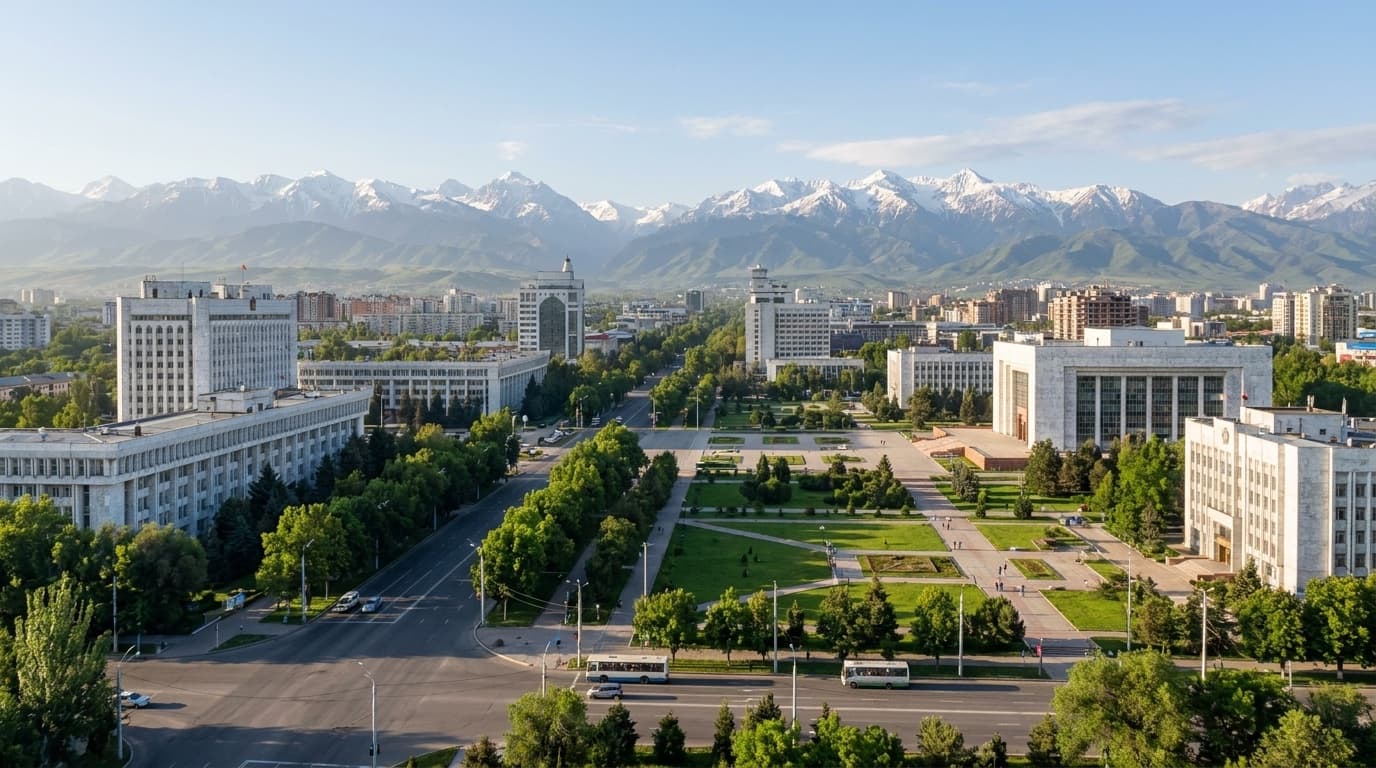
The roads: where the real risk lives
If we're being fully honest, this is the chapter that matters most. Traffic is the genuine safety topic in Kyrgyzstan, as in most of Central Asia. Local driving is assertive: overtakes come closer than you're used to, mountain roads mix trucks, old sedans and the occasional horse, and after dusk the hazards multiply - livestock wandering home, unlit carts, pedestrians in dark clothes on unlit village streets. Asphalt quality swings from excellent on the main Bishkek-Issyk-Kul corridor to patched and potholed on secondary routes, and the high passes see snow far outside calendar winter.
Counterintuitively, this is the strongest argument for driving yourself. In a shared taxi, the speed, the overtakes and the schedule belong to someone else; in your own car they belong to you. You can leave early, keep a daylight margin, slow down when the road turns to honest gravel, and stop for the view instead of white-knuckling past it. The main corridors are lined with speed cameras, which keeps traffic calmer than the folklore suggests - fines simply find the car later, so people increasingly just cruise. Drive the classic Issyk-Kul loop at your own pace and you'll wonder what the fuss was about; pick something with good clearance from our fleet and the road surface stops being a topic at all.
Mountains, altitude and weather
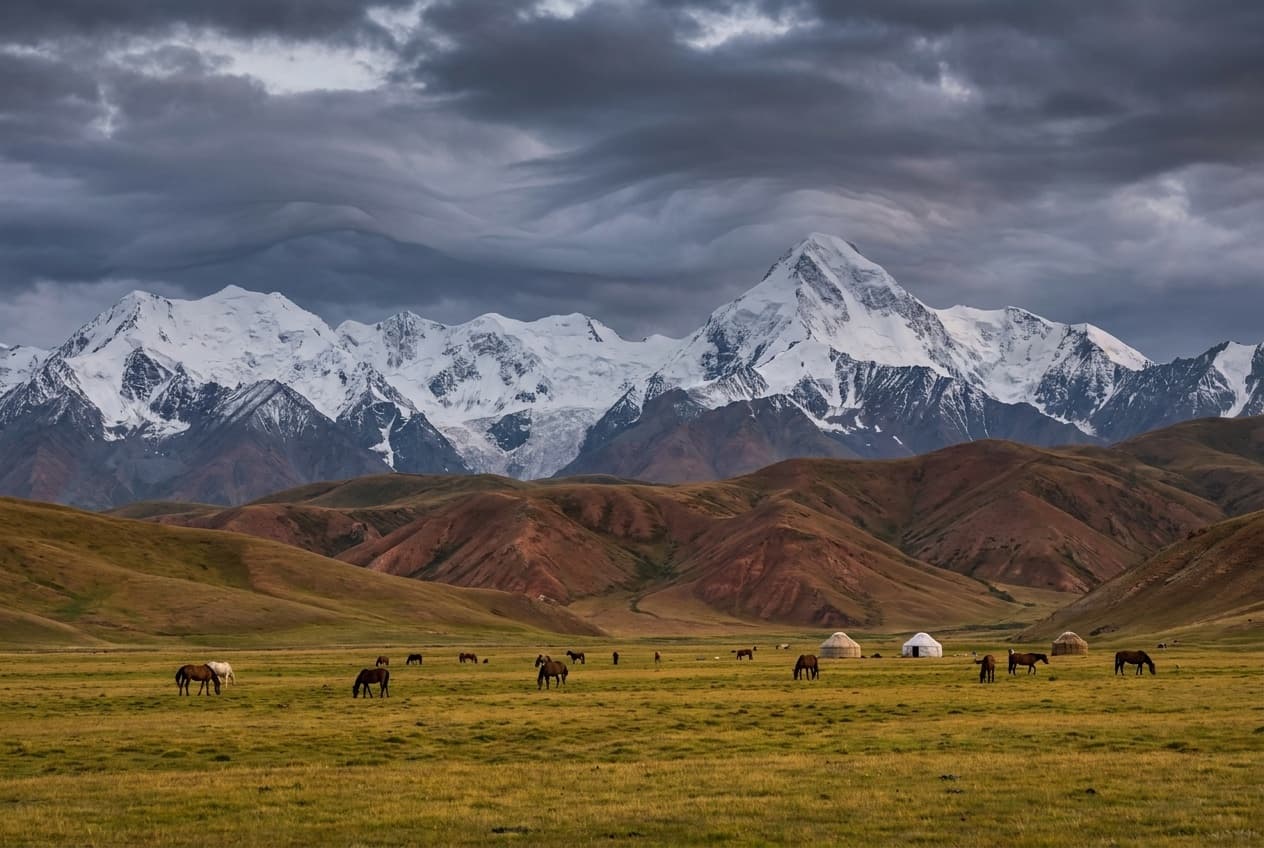
Much of what you came for sits high. Song-Kul lies at about 3,000 m, the passes above it climb higher still, and even "low" valleys like Ala-Archa start where many European ski resorts top out. Altitude is not dangerous if you take it seriously: expect a lighter head and a shorter breath on your first day up high, drink more water than feels necessary, go easy on alcohol the first night, and build your route so your sleeping altitude rises gradually. Mountain weather is the other half of the equation - a sunny August afternoon at a yurt camp can turn to sleet by dinner. Pack real layers, warm socks and a rain shell whatever the season, download offline maps, and tell someone - your guesthouse, your rental company, a friend - which valley you're pointing at. Coverage is good along the main roads and gone in the folds between them.
Solo travelers, women and families
Kyrgyzstan is firmly on the solo-travel map, including for women traveling alone. The dominant experience is curiosity and hospitality - invitations to tea, questions about your family, help you didn't ask for. Unwanted attention happens, mostly in cities at night, and the responses are the universal ones: confidence, a firm no, a taxi. In the more conservative rural south, modest dress smooths interactions - shoulders and knees covered gets you a long way. Families, meanwhile, hold a trump card: Kyrgyz culture adores children, and traveling with kids opens doors that stay closed to everyone else. The practical notes are about the car rather than safety - distances are long, so plan realistic driving days, and tell us in advance if you need a child seat.
Border zones and permits
One genuinely Kyrgyz wrinkle: some spectacular corners of the country sit inside border-zone permit areas, mostly along the Chinese frontier - parts of the Naryn region and several high valleys in the far south. None of the classic first-trip routes are affected: Issyk-Kul, Ala-Archa, Song-Kul and the whole Bishkek-Osh road need no paperwork beyond your passport. If a remote lake near the border is on your list, arrange the permit in advance - about a week - through a tour agency or a CBT office. This is bureaucracy, not danger: the only risk of skipping it is a checkpoint politely turning you around after a very long drive.
If something goes wrong
Save one number: 112, the unified emergency line, works nationwide for police, ambulance and rescue - wherever there's coverage, which is one more reason to share your route in the high country. If you're in one of our cars and anything happens - a fender-bender, a breakdown, a document question at a checkpoint - call us first: we speak the languages, we know the procedure, and walking you through it is part of the job. Pharmacies are everywhere in the cities and serious medical care concentrates in Bishkek, so travel insurance that covers mountain areas is money well spent. Answers to the everyday rental questions - insurance, deposits, what's covered - live in our FAQ.
Kyrgyzstan safety FAQ
Is Kyrgyzstan safe for tourists right now?
Yes - for the vast majority of visitors it's a calm, hospitable country. The practical risks are roads, altitude and weather rather than crime. Follow the news as you would anywhere and give any street demonstration a wide berth.
Is Kyrgyzstan safe for solo female travelers?
Generally yes, and many women travel the country alone. Standard precautions apply: modest dress in the rural south, taxis at night in cities, trust your instincts. The typical experience is hospitality, not hassle.
Is it safe to drive in Kyrgyzstan?
Yes, with adjustments: drive in daylight, keep speeds moderate, expect livestock near villages and give overtaking trucks room. Main roads are decent and heavily camera-monitored; your own car actually gives you more control over the risk than shared transport does.
Is Bishkek safe at night?
The lit center is fine for an evening walk. Late at night, use the same big-city rules as anywhere: main streets, a taxi for longer distances, and extra judgment around nightlife areas.
Do I need special permits to travel around Kyrgyzstan?
Not for the classic routes - Issyk-Kul, Song-Kul, Ala-Archa and the Bishkek-Osh road are permit-free. Border-zone areas near the Chinese frontier require a permit arranged about a week ahead through a tour agency or CBT.
What is the emergency number in Kyrgyzstan?
112 - the unified number for police, ambulance and rescue services, working nationwide wherever there is mobile coverage. If you're driving a rental, call your rental company as well; a good one will handle the local process with you.
So: is Kyrgyzstan safe? Safe enough that the biggest danger, in our experience, is that you start planning the second trip before finishing the first. Come mildly prepared - layers packed, tank full, driving done by daylight - and the country repays you with mountains few places on earth can match. When you're ready, pick up a car in Bishkek, browse our fleet, and go see for yourself.
Planning a trip to Kyrgyzstan? Pick your car and drive worry-free.
Browse the fleetSimilar posts
Do You Need a 4x4 in Kyrgyzstan? Sedan vs SUV, Route by Route (2026)
Sedan or 4x4 for Kyrgyzstan? Route-by-route verdicts from the WeRent team: the Issyk-Kul ring, gorge roads, Song-Kul, Kel-Suu, the Alay valley and winter - plus an honest comparison of renting your own 4x4 versus joining an organized jeep tour.

Best Time to Visit Kyrgyzstan: Month by Month (2026)
When is the best time to visit Kyrgyzstan? A month-by-month guide from the WeRent team: when the Song-Kul passes open, when Issyk-Kul is warm enough to swim, when Karakol's ski season runs - and why June and September are the two windows we would book first.
Kyrgyzstan Itinerary by Car: 7, 10 and 14 Days (2026)
Three field-tested self-drive itineraries for Kyrgyzstan: a 7-day northern loop around Issyk-Kul and Karakol, a 10-day version that adds a yurt night at Song-Kul, and a 14-day plan that brings in Osh and the south - with honest daily driving hours, not optimistic ones.