
Issyk-Kul Road Trip: Driving the Full Loop Around the Lake (2026)
The complete self-drive guide to Kyrgyzstan's great lake: an ~800 km loop from Bishkek through Cholpon-Ata, Karakol and the wild south shore. Day-by-day stops, honest road conditions, where to fill up - and whether you really need a 4x4.
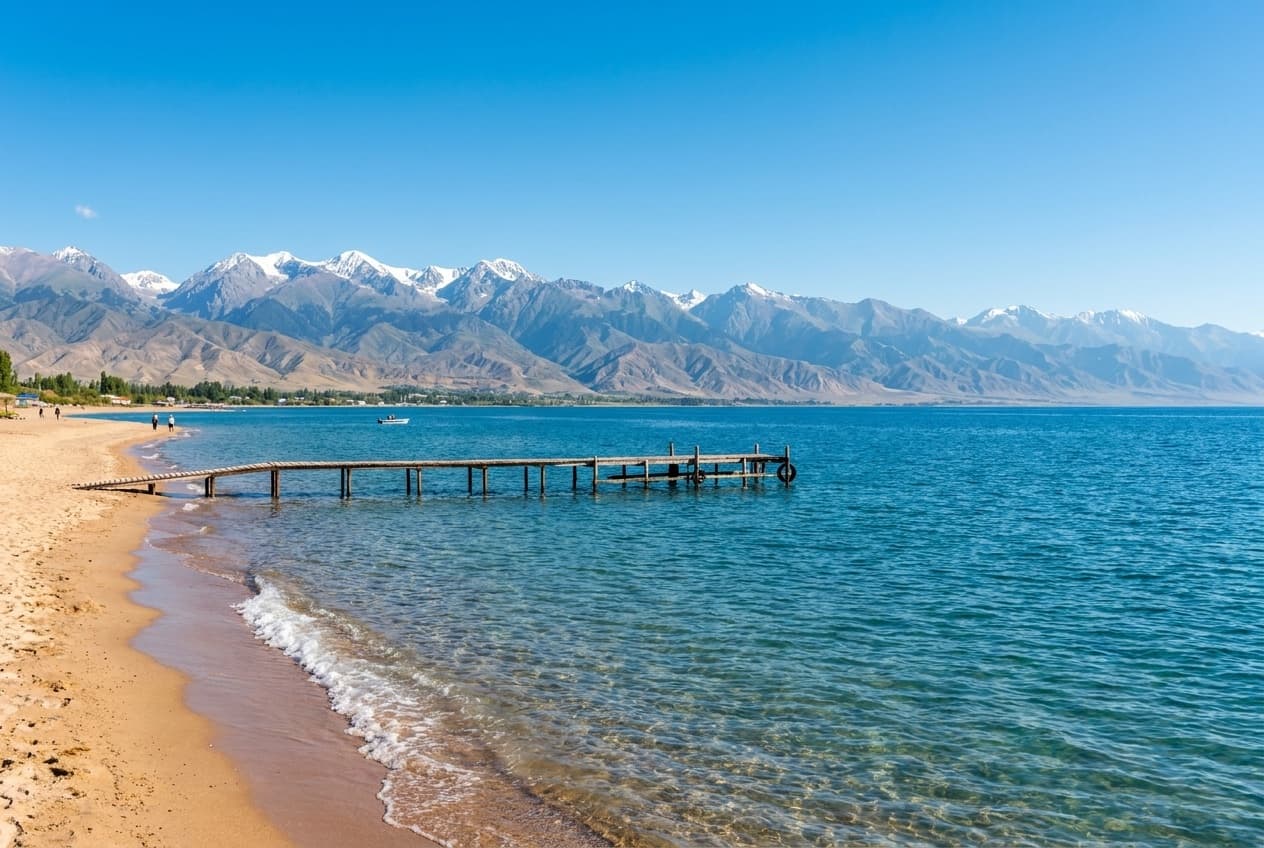
Issyk-Kul is the reason to rent a car in Kyrgyzstan. The world's second-largest mountain lake sits at 1,600 m, runs about 180 km end to end, and never freezes - the name means "warm lake" in Kyrgyz. Marshrutkas will get you to the north-shore resorts, but the places that make the trip - red canyons, waterfall gorges, empty beaches with nothing but a yurt camp behind them - are scattered along the south shore, where public transport is a rumor. With your own car, the whole ring is yours. Updated for July 2026.
The numbers are friendly: the ring road around the lake is roughly 440 km, all asphalt, plus about 180 km each way between Bishkek and Balykchy, where the ring begins. Call it 800 km door to door. You could force it into two days; three is comfortable; four lets you actually swim, hike a gorge and watch an eagle hunter work without checking the clock. This is the first route we at WeRent suggest to anyone picking up a car in Bishkek.
The loop at a glance
- Day 1 - Bishkek to Cholpon-Ata. Burana Tower near Tokmok, the Boom Gorge, first view of the lake at Balykchy, beach evening in Cholpon-Ata. (~270 km)
- Day 2 - The gorges, then Karakol. A gravel horseshoe through the Grigorievka and Semenovka gorges, kumys stops, then along the shore to Karakol. (~200 km with detours)
- Day 3 - The south shore. Jety-Oguz red cliffs, the Barskoon waterfalls, Skazka Canyon at golden hour, overnight in a yurt camp near Bokonbaevo. (~210 km)
- Day 4 - Eagle hunters and home. A falconry demonstration, an optional float in the hyper-salty "dead lake" at Kara-Koo, then back through Balykchy to Bishkek. (~280 km)
Getting to the lake: Burana and the Boom Gorge
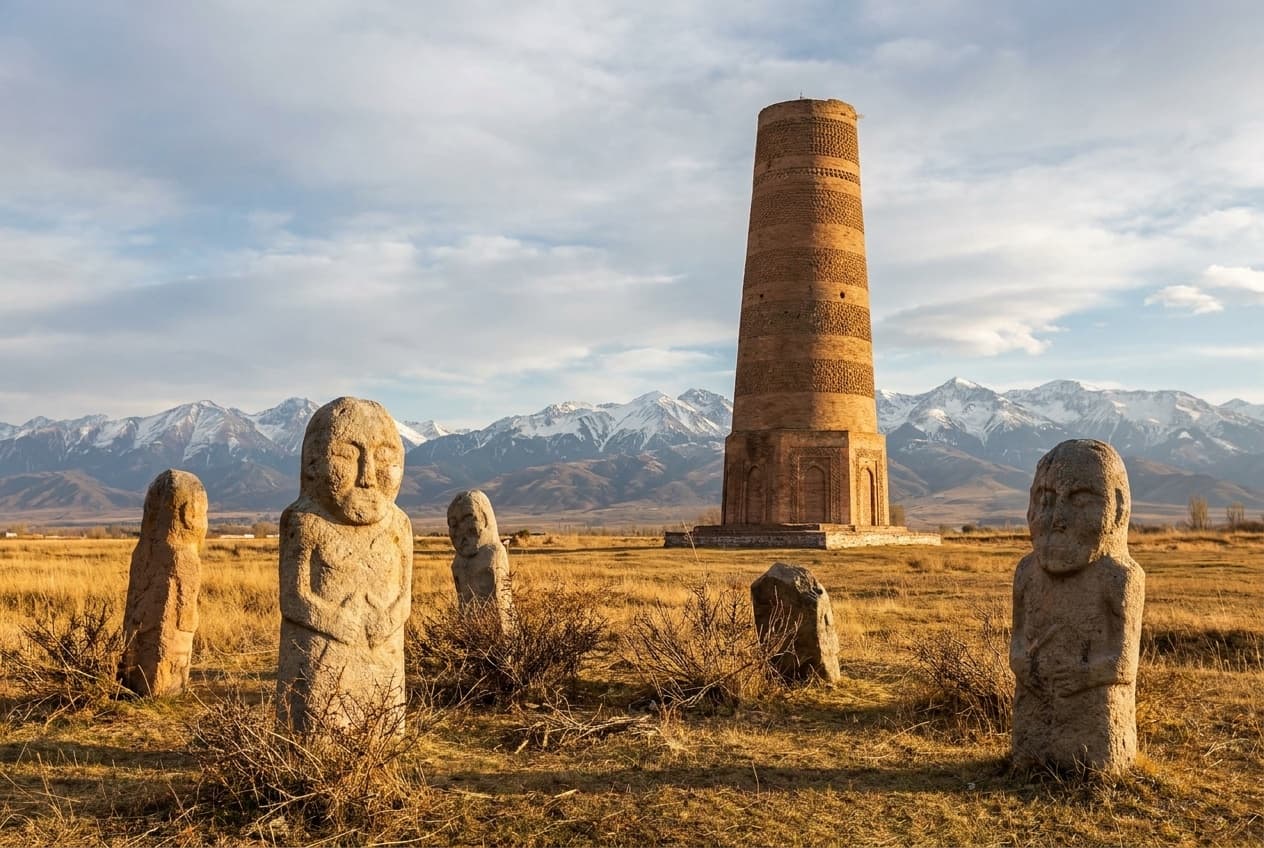
Leave Bishkek in the morning and take the A365 east. About 80 km in, signposts near Tokmok point to Burana Tower - an 11th-century minaret, all that remains of the Silk Road city of Balasagun, standing in a field of balbals (carved stone grave markers). Climb the tight, dark spiral to the top; the snowy wall of the Ala-Too behind it is the best photo of the first day. The detour costs 15 minutes each way and a small cash entry fee.
Past Tokmok the road squeezes into the Boom Gorge, following the Chu river between two mountain ranges - this is the only road corridor to the lake, so expect trucks and patient overtaking. Hikers can detour to the red towers of the Konorchek canyons from a trailhead inside the gorge (a half-day walk). Then the valley opens, and at Balykchy you get your first flash of impossibly blue water. Count on about four hours Bishkek to Cholpon-Ata without stops, five with Burana and lunch.
The north shore: warm water and mountain gorges
Cholpon-Ata is the lake's resort capital: a long strip of beaches, guesthouses and sanatoriums with the Tian Shan floating across the water. It's busy in July and August - that's part of the fun - and the two sights worth your time are genuinely good: an open-air field of ancient petroglyphs on the edge of town, ibex and hunting scenes scratched into glacial boulders over thousands of years, and the Ruh Ordo cultural complex by the shore, dedicated to the writer Chingiz Aitmatov.
Half an hour further east, two green valleys cut into the mountains behind the villages of Grigorievka and Semenovka. The classic move is the gorge horseshoe: drive up one valley, cross the meadow pass between them, come down the other. It's about 50 km of gravel - washboard in places, fine at a calm pace in any car when dry - through Tian Shan spruce, past yurts selling kumys (fermented mare's milk) and locals offering horse rides. Back on the highway, it's another hour to Karakol.
Karakol: the turnaround point, and the best food on the lake
At the lake's far end, Karakol feels like a proper mountain town: poplar-lined streets, a wooden Orthodox cathedral, and the extraordinary Dungan mosque - built in 1910 like a Chinese temple, reportedly without a single nail. Eat ashlan-fu, the town's signature cold, spicy noodle dish, at the bazaar's dedicated alley, and refuel both the car and yourselves here: Karakol has the last big cluster of petrol stations before the south shore. It's also the gateway to Altyn-Arashan's hot springs and the Karakol valley - worthy of a trip of their own.
The south shore: the wild half

West of Karakol the resort strip vanishes and the landscape turns up the color. First stop: Jety-Oguz, the "Seven Bulls" - a wall of red sandstone cliffs about 30 km from town, with the famous Broken Heart rock at the valley mouth (asphalt to the village, then a short stretch of decent gravel). An hour on, the Barskoon gorge climbs toward waterfalls under real glaciers - the wide gravel road was built for the Kumtor gold mine, and by the parking area stand two monuments to Yuri Gagarin, who recuperated on this shore after his flight.
Time the next stop for late afternoon: Skazka (Fairy-Tale) Canyon near Tosor, 2 km of washboard track off the highway and a small cash fee, is a maze of orange and crimson ridges that goes molten at golden hour. Sleep in a shorefront yurt camp around Bokonbaevo or Tosor - dinner is usually included, the beach is yours alone, and the stars are absurd. In Bokonbaevo the next morning, catch an eagle hunter demonstration: the salbuurun falconry tradition is alive here, not a museum piece. On the way west, the hyper-salty "dead lake" at Kara-Koo lets you float Dead-Sea-style before the run home through Balykchy.
What car do you actually need?
Honest answer: the ring itself is asphalt all the way around, in decent shape - a compact sedan does the loop happily. What the gravel spurs reward is clearance and comfort: the gorge horseshoe, the Jety-Oguz approach, the Skazka track and the Barskoon road are all fine in a normal car when dry, but a crossover or SUV takes the washboard out of your spine and shrugs off the ruts after rain. If you plan to chase every side valley - or come in early spring or late autumn - take a proper 4x4 like a Prado or 4Runner and stop thinking about the road surface entirely. Browse our fleet and pick your weapon.
Practical notes
- Fuel: fill up in Balykchy, Cholpon-Ata or Karakol. Stations exist on the south shore but thin out - don't start the southern leg below half a tank.
- Speed and cameras: 60 km/h in towns (often 40 near schools), 90 outside. The Bishkek-Balykchy highway is lined with cameras; tickets find the rental car, so just cruise.
- Cash: entry fees (Burana, petroglyphs, Skazka), kumys, yurt lunches and eagle shows are cash-in-som affairs. ATMs live in Cholpon-Ata and Karakol.
- Documents: driver's license, passport and the rental papers in the glovebox. Checkpoints are rare and routine; no permits are needed anywhere on the loop.
- Traffic timing: half of Bishkek drives to the lake on Friday evening and back on Sunday evening. Shift your legs a few hours off those peaks and the road is yours.
- Connectivity: local SIMs are cheap and coverage along the ring is solid; it drops only deep in the gorges. Download offline maps anyway.
When to go
The loop works year-round - there are no high passes on the ring, and the lake famously never freezes. July-August is swim season and peak buzz; June is the greenest, with snow still low on the peaks; September keeps warm water into mid-month and empties the beaches; October turns the poplars gold. In winter the ring stays open and Karakol becomes a ski town - a different trip, and a good one. Whenever you come, pack layers: at 1,600 m the evenings bite even in August.
Issyk-Kul road trip FAQ
How long does it take to drive around Issyk-Kul?
The ring is about 440 km - 8-9 hours of pure driving. With the drive from Bishkek and back it's roughly 800 km; plan three days minimum, four to enjoy it.
Is the road around the lake paved?
Yes - the full ring is asphalt in decent condition. Gravel appears only on side spurs: the gorge roads, the Jety-Oguz approach and the 2 km track into Skazka Canyon.
Do I need a 4x4 for the Issyk-Kul loop?
Not for the ring itself - any car copes. A crossover or SUV makes the gravel detours comfortable; a true 4x4 only matters if you push deep up the gorges or travel in early spring or late autumn.
Can I visit Issyk-Kul as a day trip from Bishkek?
Technically yes - Cholpon-Ata is about four hours each way, so it's a long day for a short swim. An overnight makes it twice the trip; the full loop needs three days or more.
Where should I stay around the lake?
North shore: hotels and guesthouses in Cholpon-Ata and Bosteri. East: Karakol's guesthouses. South: shorefront yurt camps around Tosor and Bokonbaevo - book ahead in July-August.
Do I need any permits to drive around Issyk-Kul?
No - the standard loop stays outside border-permit zones. Keep your passport handy for the occasional routine checkpoint, and that's it.
The best part of an Issyk-Kul road trip is how little it asks of you: pick up a car in Bishkek in the morning, and by mid-afternoon you're parked above a turquoise bay deciding whether to swim first or eat first. Pack a towel, some cash and a sweater for the evening - the lake handles the rest.
Planning a trip to Kyrgyzstan? Pick your car and drive worry-free.
Browse the fleetSimilar posts
Karakol Travel Guide: Gorges, Hot Springs and Ski Season (2026)
Everything we know about Karakol, Kyrgyzstan's best mountain base: the Dungan mosque and wooden cathedral, ashlan-fu at the bazaar, the rough road to Altyn-Arashan's hot springs, Jety-Oguz's red cliffs, the Karakol valley - and the country's biggest ski area in winter.
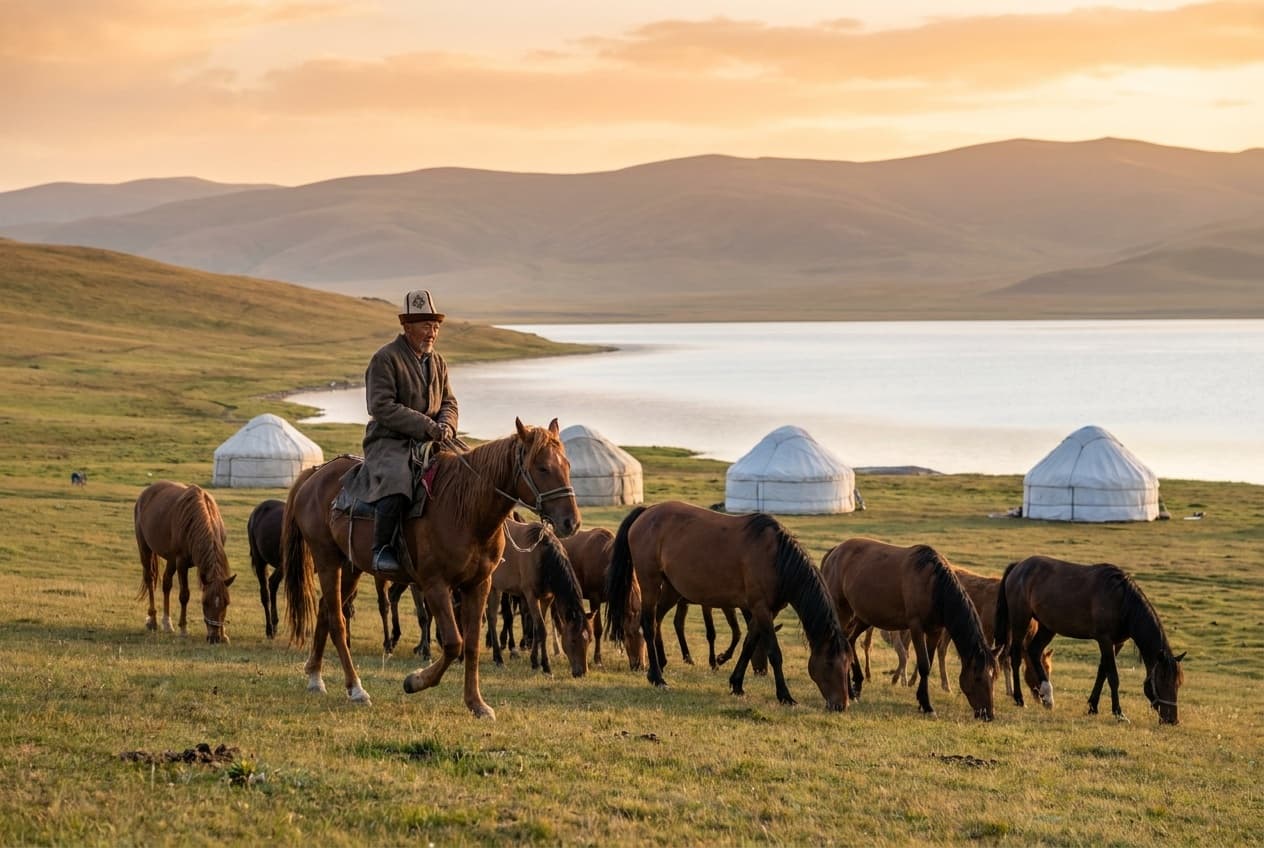
Song-Kul by Car: Routes, Passes and Yurt Nights (2026)
How to reach Song-Kul lake by car: the Kalmak-Ashuu and Moldo-Ashuu passes, when the road is open, why a 4x4 genuinely matters, staging in Kochkor, yurt-camp nights, altitude tips and a two-day plan from Bishkek.
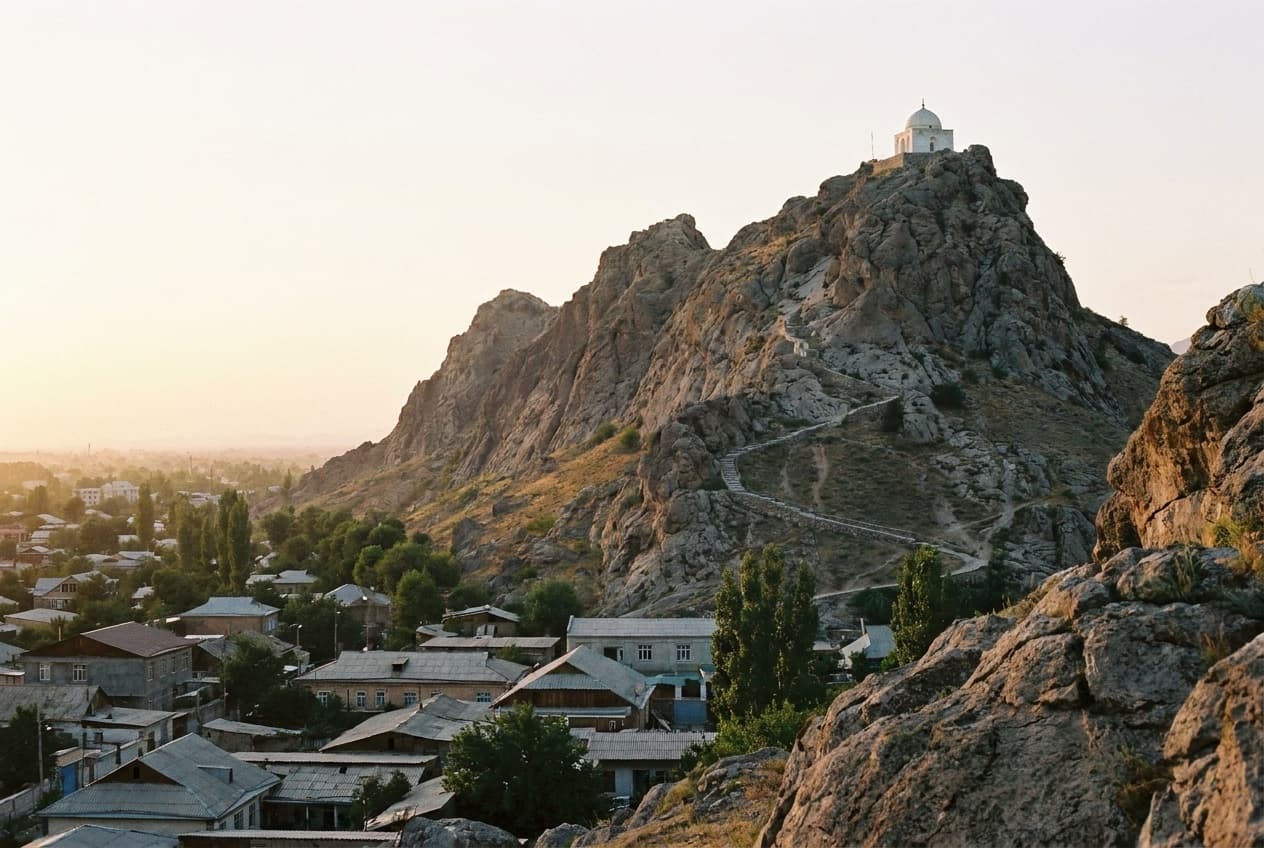
Osh and the South: Sulaiman-Too, Arslanbob and the Alay Valley (2026)
A driving guide to southern Kyrgyzstan: Osh and its UNESCO-listed Sulaiman-Too, the Jayma Bazaar, the Karakhanid minaret at Uzgen, the walnut forests of Arslanbob, and the Alay valley with Lenin Peak on the horizon - plus the fly-to-Osh-and-rent-there play.