
Song-Kul by Car: Routes, Passes and Yurt Nights (2026)
How to reach Song-Kul lake by car: the Kalmak-Ashuu and Moldo-Ashuu passes, when the road is open, why a 4x4 genuinely matters, staging in Kochkor, yurt-camp nights, altitude tips and a two-day plan from Bishkek.
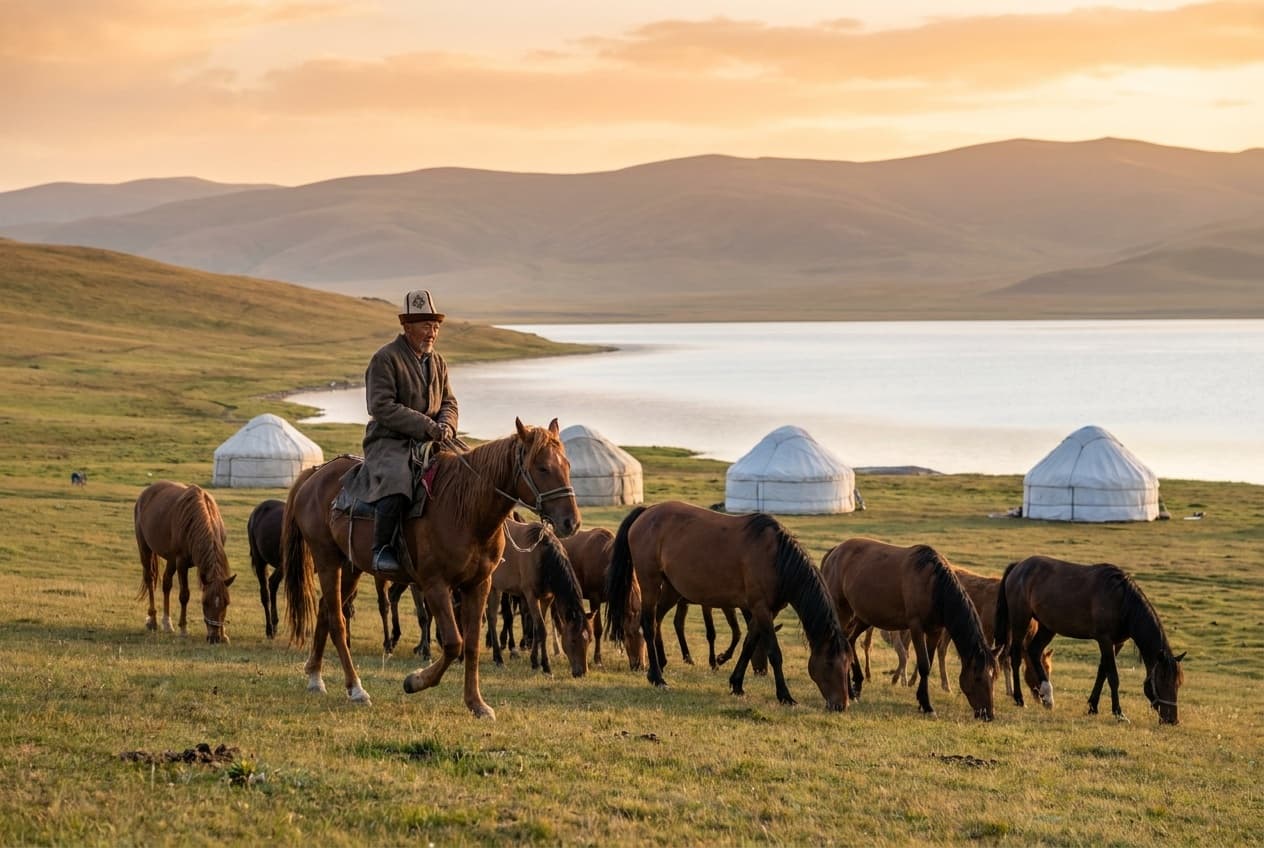
Ask anyone who has traveled Kyrgyzstan to close their eyes and picture the country, and odds are they will describe Song-Kul: a sheet of cold blue water at about 3,000 m, ringed by treeless green pastures rolling to the horizon, scattered with yurts and half-wild horses. There is no town up there, no fences, no power lines - just herders, sky, and a lake that changes color every hour. Getting to it is a proper mountain drive, and that drive is precisely the point: gravel switchbacks over a high pass, marmots whistling from the roadside, and then the moment the plateau opens and the water appears. This guide covers how to do it by car - the routes, the passes, the timing and the yurt nights. Updated for August 2026.
Song-Kul is the trip our guests ask about more than any other, so we at WeRent have folded every briefing we give at the pickup counter into one guide. The short version: the lake is reachable roughly from mid-June to September, a 4x4 is genuinely recommended rather than a marketing upsell, there is no fuel station and no ATM anywhere on the plateau, and the small town of Kochkor is your staging post. The long version follows.
A lake on the roof of the country
Song-Kul (maps also spell it Son-Kul or Song-Köl) fills a shallow bowl in the Naryn region at about 3,000 m - the country's second-largest lake, and its most otherworldly. There are no trees at this altitude and no permanent settlements on the shore: in summer, herding families drive their horses, sheep and yaks up to the surrounding pastures - the jailoo - and pitch the yurts that travelers now share. The scale is hard to prepare for: the far shore is a faint line, the sky does most of the talking, and the weather runs through four seasons in an afternoon - sunburn at noon, hail at four, a sky full of stars by ten. It is the closest thing Central Asia offers to a time machine, parked one mountain pass away from the nearest asphalt.
When the road is open
The honest season is short: roughly mid-June to mid-September, with generous error bars on both ends. The passes hold snow late into spring and take it again early in autumn, and even in July a cold front can dust the switchbacks white for a morning. Within that window the lake has moods. Late June is wildflowers and streams running high with meltwater; July and August are the warmest and the most social, with every camp open and horse games on the jailoo; early September is our quiet favorite - golden grass, empty tracks, sharp light - but camps begin packing up and nights dip well below freezing. Outside the window, don't push it: the track over the passes closes with the first serious snow and stays closed until early summer, as our driving guide explains in more detail.
The approaches: two passes, one staging town
Every practical route starts from Kochkor, a low-key market town about four hours' drive from Bishkek via Balykchy, on good asphalt the whole way. Stock up here: fuel tank to the brim, cash from an ATM, snacks and water from the bazaar. Beyond Kochkor the asphalt soon gives way to graded gravel, and there are two classic ways up:
- Kalmak-Ashuu (from the Kochkor side): the most direct way in - a gravel road climbs a valley south-west of Kochkor, switchbacks over a pass at about 3,400 m and drops you at the lake's north-eastern shore in roughly two to three hours. This is the route most camps describe when they give directions.
- Moldo-Ashuu (from the south): the famous one - a staircase of hairpins carved into a green mountainside, reached from the Naryn road near Ak-Tal. Longer from Bishkek, but the descent (or climb) is one of the great road spectacles of Central Asia, and the southern shore feels even emptier.
- The loop: up Kalmak-Ashuu, a night or two at the lake, down Moldo-Ashuu toward Naryn - or the reverse. It turns Song-Kul from an out-and-back into a proper circuit and connects neatly to onward travel south.

Do you need a 4x4? Up here, honestly, yes
On most Kyrgyz itineraries the SUV question is about comfort. On this one it is about the trip happening at all. The tracks over both passes are graded dirt and gravel - fine surfaces in good weather, but steep, loose in the hairpins, crossed by small run-off streams, and quick to turn greasy after rain, which up here can arrive any afternoon. Ground clearance matters more than raw power: what stops low cars is the rutted, rocky final stretch to the camps, not the gradient. Locals do coax ordinary sedans up in perfect midsummer conditions, but a rental sedan on a wet pass is a bad afternoon waiting to happen. Take a proper SUV from our fleet, keep the passes for daylight hours, and the drive becomes what it should be: the best part of the trip.

Yurt nights: what staying up top is like
Sleeping in a yurt is not a gimmick here; it is the only accommodation there is, and it is wonderful. Camps of a few families each stand along the northern and southern shores: you get a felt-lined yurt with a stack of blankets, dinner and breakfast cooked by the hosts, and a torch-lit walk to the outhouse under a staggering sky. Facilities are honest rather than luxurious - expect simple washbasins, and at some camps a banya rather than a shower. Evenings drop toward freezing even in August, so the blanket stack is not decorative. In July and August it is worth arranging a camp a few days ahead - guesthouses in Kochkor and the local community-tourism offices will happily fix it - while in June and September you can usually just drive up and pick a shore. Add a sunrise horse ride: every camp can saddle a calm horse and send a young guide along, and the lake from horseback at seven in the morning is the postcard you came for.
- Real warm layers - a down jacket and a hat are not overkill in August; the moment the sun drops, so does the thermometer.
- Headlamp and power bank - camps run on limited solar electricity, and the walk to the outhouse is dark in the best way.
- Cash in som - for the camp, the horse ride and the jar of fresh kymyz someone will offer you.
- Water and snacks from Kochkor - there are no shops on the plateau; the hosts feed you well, but the road deserves its own supplies.
- Sunscreen - at 3,000 m the UV is fierce even when the air is cold.
A two-day plan from Bishkek (and a better three-day one)
Day 1: leave Bishkek early, run the good asphalt past Balykchy to Kochkor for lunch and the final fuel stop, then climb Kalmak-Ashuu in the afternoon light - about six to seven driving hours in total, and the last two are the fun ones. Settle into a camp, walk the shore, stay up for the stars. Day 2: sunrise, a horse ride, then either retrace your route to Kochkor or drop south over Moldo-Ashuu and loop back via the Naryn road. With a third day you can stop rushing: two nights at the lake, or one night up top and a second on Issyk-Kul, joining the ring road our Issyk-Kul guide covers - the two lakes, alpine and beach, make a perfect contrast pair. Whatever you choose, keep pass driving in daylight; the tracks are unlit and unforgiving at night, a point our safety guide makes at length.
Song-Kul by car FAQ
When is the road to Song-Kul open?
Roughly from mid-June to mid-September. The passes close with the first serious autumn snow and reopen only in early summer, and even inside the season a cold front can whiten them for a morning - check conditions in Kochkor before you climb.
Can I get to Song-Kul in a regular sedan?
We don't recommend it. The tracks over the passes are steep graded dirt with loose hairpins, small stream crossings and a rutted final stretch - manageable for an SUV, risky for a low car, and genuinely bad news after rain. Take a 4x4 and enjoy the drive instead of surviving it.
How long is the drive from Bishkek to Song-Kul?
About six to seven hours of actual driving: some four hours of good asphalt to Kochkor via Balykchy, then two to three hours of gravel over the Kalmak-Ashuu pass. Leave early, and plan to sleep at the lake rather than day-tripping it.
Are there fuel stations, shops or ATMs at Song-Kul?
No - none of the three. The last reliable fuel, shops and ATMs are in Kochkor (or Naryn from the south). Arrive with a full tank, cash in som, and your own water and snacks.
Where do you sleep at Song-Kul?
In yurt camps run by herding families along the shores - a felt yurt, a pile of blankets, dinner and breakfast from the hosts. In July and August it's worth booking a few days ahead through a Kochkor guesthouse or the local community-tourism office; in the shoulder months you can usually just show up.
How cold does it get at Song-Kul in summer?
Days can be T-shirt warm, but nights drop toward freezing even in August, and early-September nights go below it. Bring a down jacket, a hat and warm socks - the blanket stack in the yurt does the rest.
Song-Kul rewards exactly the kind of travel a rental car makes possible: leave when the light is right, stop for every marmot, stay a second night because the first one ended under more stars than you have ever seen. Check the rental requirements in our FAQ, pick an SUV from our fleet, and point it at the passes - the lake has been holding up its end of the bargain for a few thousand years. See you in Bishkek.
Planning a trip to Kyrgyzstan? Pick your car and drive worry-free.
Browse the fleetSimilar posts
Kel-Suu: Reaching Kyrgyzstan's Wildest Lake (2026)
How to reach Kel-Suu lake in 2026: the border-zone permit and how far ahead to arrange it, the 4x4 route through Naryn and At-Bashy, yurt camps in the Kok-Kiya valley, and the final approach by horse or on foot. An honest guide from the WeRent team.
Issyk-Kul Road Trip: Driving the Full Loop Around the Lake (2026)
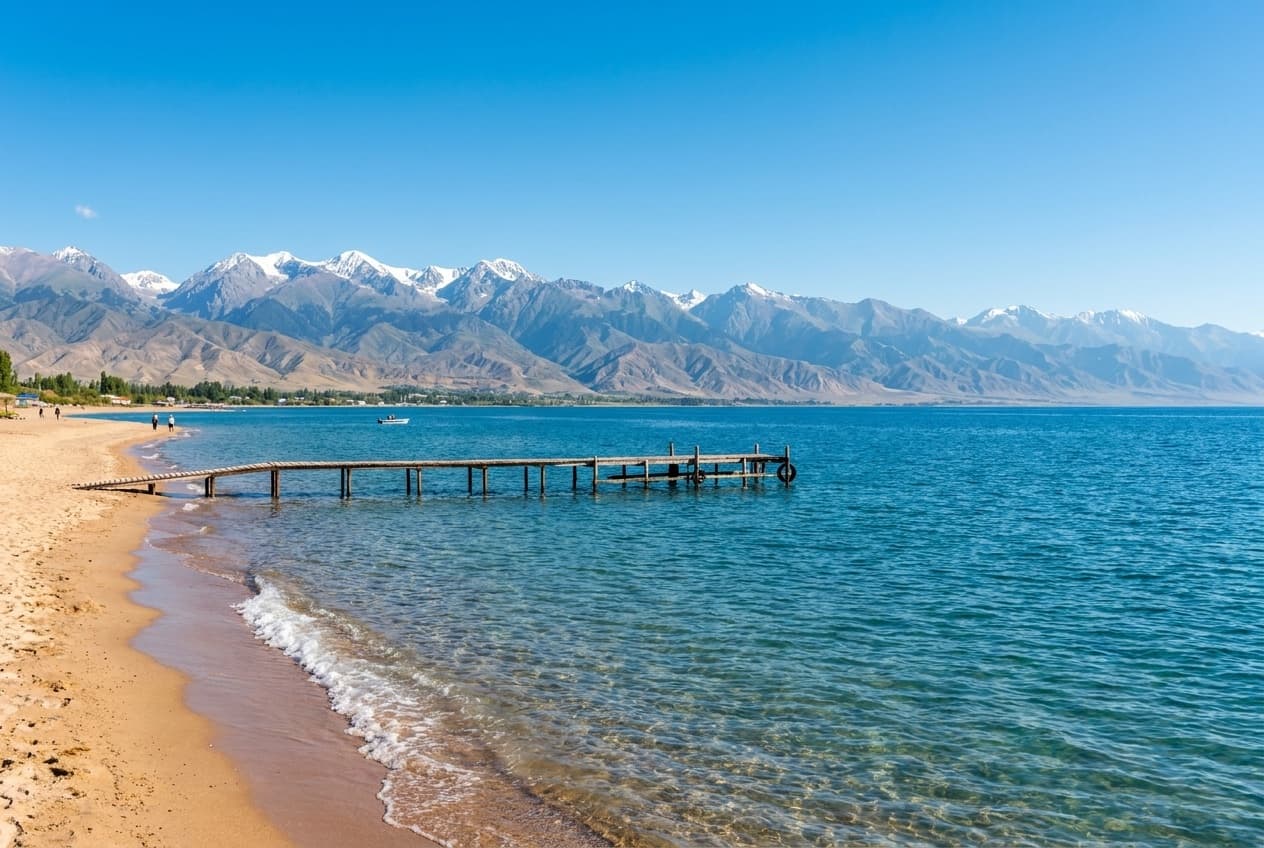
The complete self-drive guide to Kyrgyzstan's great lake: an ~800 km loop from Bishkek through Cholpon-Ata, Karakol and the wild south shore. Day-by-day stops, honest road conditions, where to fill up - and whether you really need a 4x4.
Osh and the South: Sulaiman-Too, Arslanbob and the Alay Valley (2026)
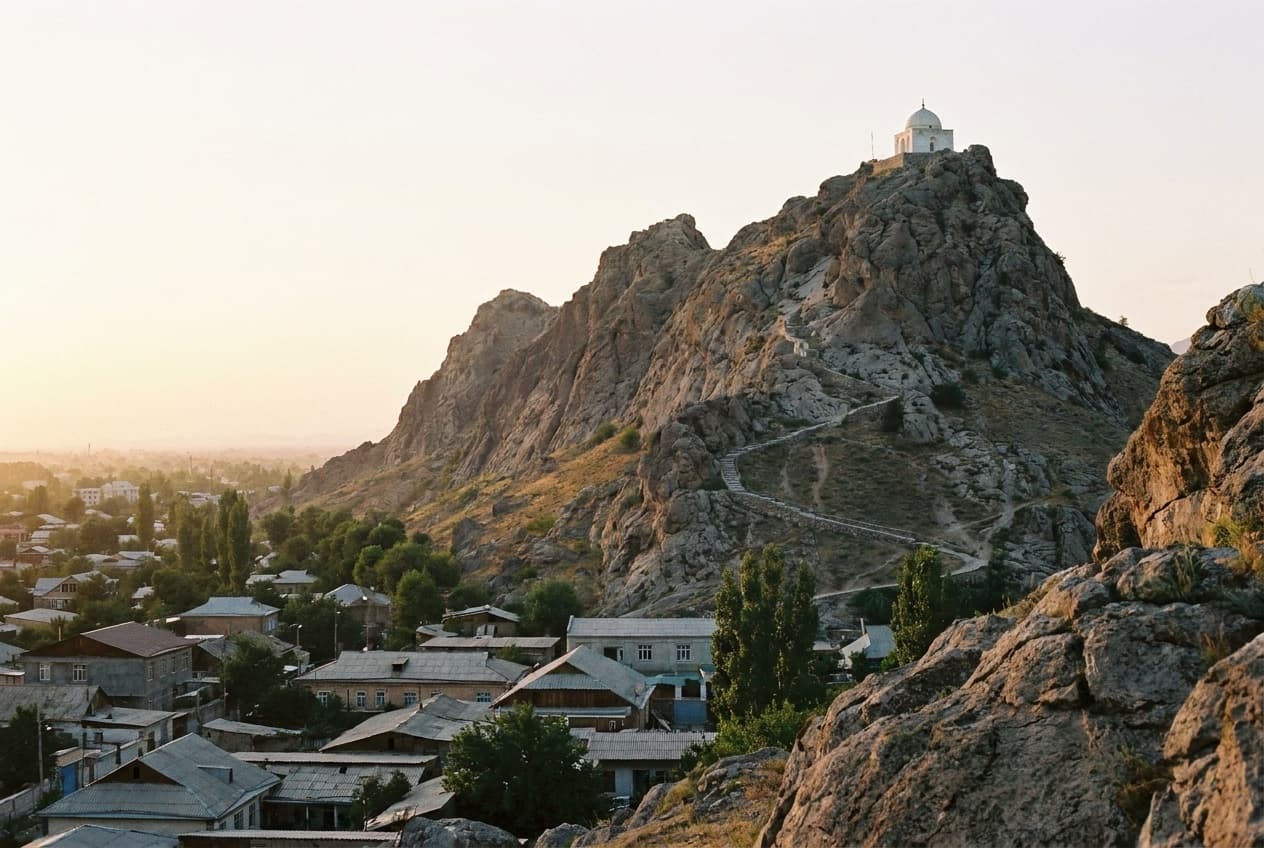
A driving guide to southern Kyrgyzstan: Osh and its UNESCO-listed Sulaiman-Too, the Jayma Bazaar, the Karakhanid minaret at Uzgen, the walnut forests of Arslanbob, and the Alay valley with Lenin Peak on the horizon - plus the fly-to-Osh-and-rent-there play.