
Ala-Archa National Park: The Easiest Day Trip from Bishkek (2026)
How to do Ala-Archa National Park by car: the ~40-minute drive from Bishkek, the per-car entry fee, the alplager trailhead, the easy river walk versus the Ak-Sai waterfall hike, what to bring, winter access - and Chunkurchak as the quieter alternative.
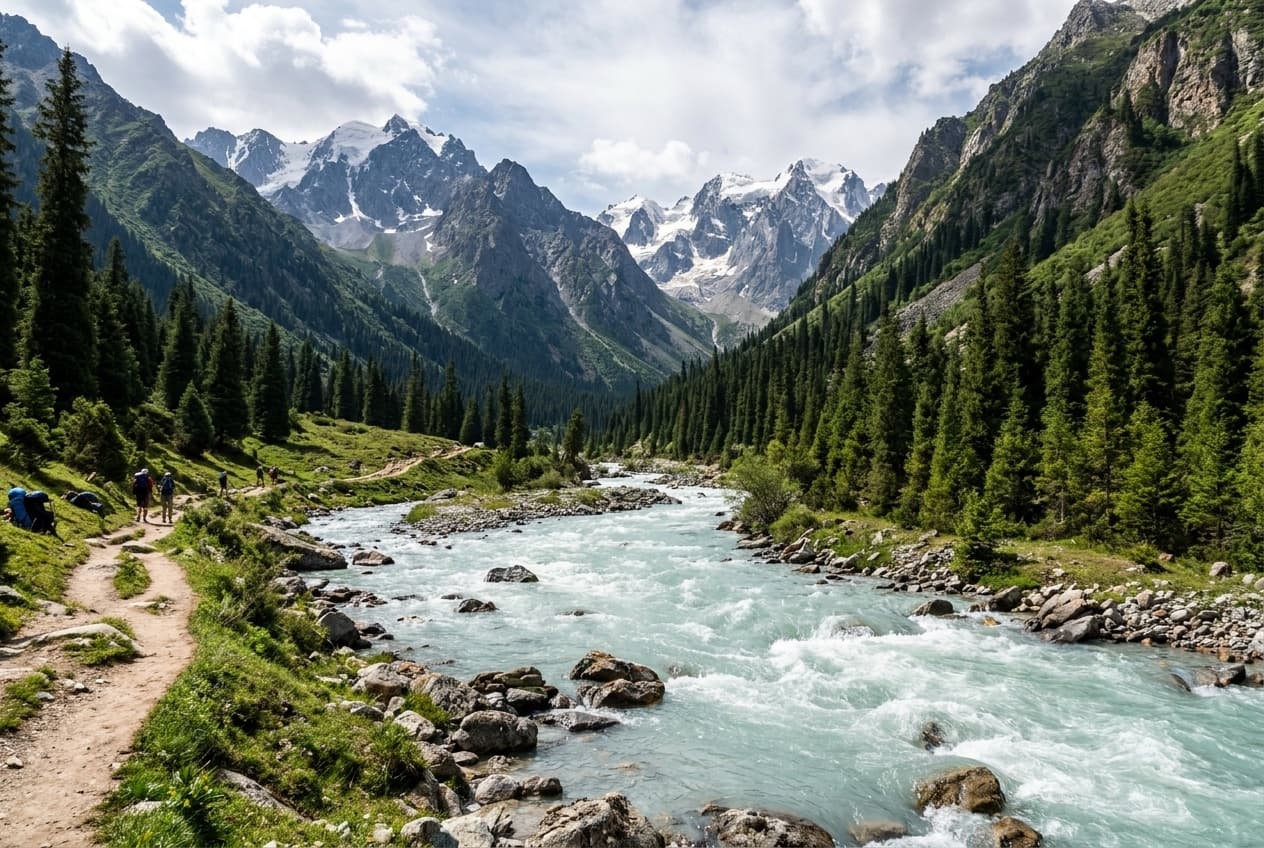
Every capital should be so lucky. Point a car south out of Bishkek and keep going straight: in about forty minutes the apartment blocks thin out, the road tilts uphill, and you are driving into a granite valley of juniper forest, glacier-fed white water and peaks pushing past 4,000 m. This is Ala-Archa National Park - the mountain backyard of a whole city, and the single easiest way anywhere in Central Asia to trade traffic for alpine air. There is no expedition logistics here: you pay a small fee at the gate, park at an old Soviet alpine camp, and choose between an easy riverside walk and a proper huff-and-puff hike to a waterfall. If you have one free day in Bishkek and a set of car keys, this is where they should take you. Updated for August 2026.
Ala-Archa is the first trip we at WeRent suggest to guests picking up a car in Bishkek, because it fixes the capital's one great complaint - you can see the mountains from every street corner but touch them from none - in under an hour, on ordinary asphalt, in any car on our lot. The essentials: about 40 minutes each way, a small per-car entry fee paid in cash at the gate, a paved road all the way to the trailhead, and walks for every fitness level. The details follow.
A granite valley forty minutes from your hotel
The park protects the gorge of the Ala-Archa river, which pours out of the glaciers of the Kyrgyz Ala-Too range directly south of the capital. The name refers to the archa - the juniper that scents the whole valley and that locals have always treated as a half-sacred tree. This was the training ground of Soviet mountaineering: generations of climbers cut their teeth on the walls above the valley, and serious alpinists still walk past the waterfall toward the Ratsek hut and the ice beyond. For everyone else the appeal is simpler - a deep, steep, genuinely wild valley with marked trails, cold clean water and views that start big and get bigger, all close enough to the city that you can be back for dinner.
Getting there and getting in
Navigation could not be simpler: the park entrance sits almost due south of the city center, past the village of Kashka-Suu, and every map app knows it. Expect about 40 minutes from downtown in normal traffic, all on asphalt. At the gate a ranger collects a small per-car entry fee - cash only, so have som ready. Beyond the barrier the road narrows and climbs for another twenty minutes through forest and past picnic clearings to the road's end at the alplager - the old alpine camp at about 2,100 m, with a car park, a small hotel and the trailheads. The whole way is paved, if patched in places; no SUV required, though in winter the usual mountain-driving rules apply.
Two walks from the alplager (and one for the ambitious)
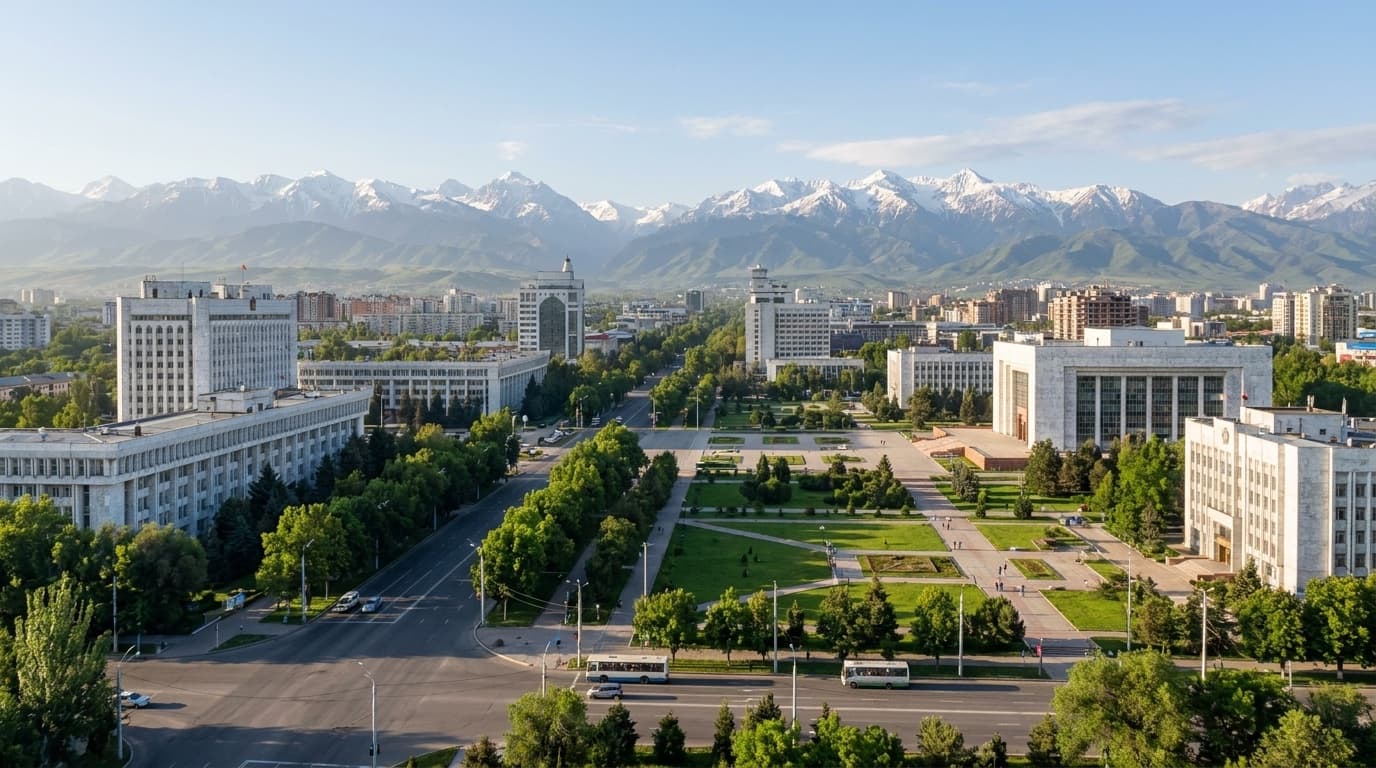
Everything starts at the alplager clearing, where the valley briefly flattens and the Ak-Sai stream comes down to meet the Ala-Archa. From the car park you have three classic options, in sharply rising order of effort:
- The river walk: a broad, gentle path continues up the main valley floor beside the water - juniper, boulders, gravel bars and picnic spots. Walk as far as feels good and turn around; an hour or two makes a perfect stroll for families, and you gain the big views without earning them.
- The Ak-Sai waterfall hike: the signature trail climbs steeply out of the valley through forest, then across open slopes, to a waterfall at roughly 2,700 m fed by the Ak-Sai glacier above. Count on a few hours round trip, real shoes and a real appetite afterwards - the payoff is the icefall panorama that owns the top half of the hike.
- On to the Ratsek hut: past the waterfall the path keeps climbing to the mountaineers' hut below the Ak-Sai glacier. It is a serious day at real altitude - worth it for fit, equipped hikers who started early, and firmly not a flip-flops extension.
What to bring
The alplager has a small hotel and, in season, simple food - but treat anything beyond the car park as self-service wilderness. Our short packing list:
- Water and snacks - the river is glacier-cold but the sun is high-altitude strong; carry more water than a city walk needs.
- Layers and a rain shell - the gorge brews its own weather, and an afternoon shower in July surprises nobody but the unprepared.
- Proper shoes for the waterfall - the trail is steep, rooty and loose in places; trainers survive it, hiking shoes enjoy it.
- Sunscreen and a hat - you start at about 2,100 m and only go up.
- Som in cash - for the gate, and for the roadside honey and kymyz stands on the way back down.
Seasons: green, gold and white
Ala-Archa works in every season, which is rare praise in this country of short mountain windows. Summer is prime: green slopes, a roaring river, wildflowers, and the waterfall at full melt-season volume - balanced by afternoon thunderstorms and weekend crowds. Autumn may be the connoisseur's pick: golden juniper light, stable weather, empty trails. Winter does not close the park - the road to the alplager generally stays driveable, and the valley turns into a snow-and-granite postcard beloved by ice climbers and snowshoers; take the icy last kilometers slowly and start walks early, because the light goes fast. Spring brings high water and the freshest greens, with some mud as the price of admission.
Chunkurchak: the quieter valley next door
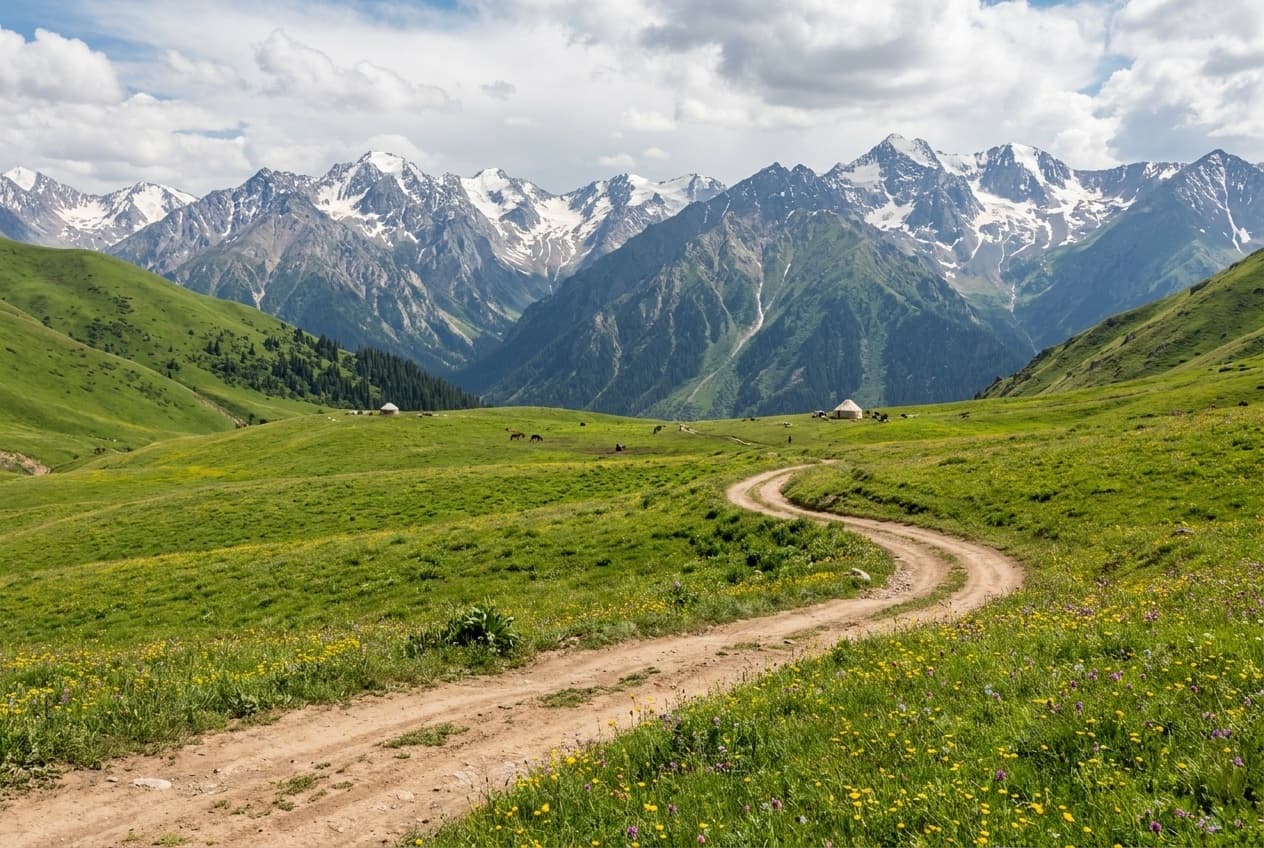
If you have a second free day - or Ala-Archa's weekend car park scares you off - aim one valley east at Chunkurchak. It is the same mountain wall, softer in shape: rolling alpine meadows instead of a tight granite gorge, horses grazing where Ala-Archa has scree, a handful of low-key resorts and a small ski base in winter. The drive from the city takes a similar chunk of the morning, the final stretch is rougher than Ala-Archa's asphalt but fine with care in dry weather, and on many summer Saturdays you will meet more shepherds than tourists. As a pair, the two valleys make a perfect contrast weekend without ever leaving sight of the capital.
Ala-Archa day trip FAQ
How far is Ala-Archa from Bishkek?
The park gate is about a 40-minute drive south of the city center on asphalt the whole way, plus roughly twenty more minutes on the narrow park road up to the alplager trailhead. It is comfortably a half-day trip, and a full day if you hike to the waterfall.
Do I need a 4x4 to visit Ala-Archa?
No - the road is paved from Bishkek all the way to the alplager car park, and any car handles it in summer. In winter the last kilometers can be snowy or icy, so drive slowly and check conditions; an SUV adds peace of mind then, not necessity in July.
How much does entry to Ala-Archa cost?
There is a small entry fee charged per car at the gate, cash only, in som. The amount changes from time to time, so we won't pin a number on it - just have cash with you and it will not dent the day's budget.
How hard is the Ak-Sai waterfall hike?
Honestly steep: the trail climbs from about 2,100 m at the alplager to roughly 2,700 m at the falls, with forest roots lower down and loose ground higher up. A reasonably fit walker does the round trip in a few hours with breaks. Wear real shoes, carry water, and start in the morning to keep ahead of afternoon weather.
Can you visit Ala-Archa in winter?
Yes - the park stays open year-round and the road to the alplager generally remains driveable, though the final stretch can be icy. Winter turns the gorge into snowshoe and ice-climbing country; go in the morning, drive the last kilometers gently and don't count on the waterfall trail without proper gear.
Is there food or accommodation in the park?
The alplager has a small hotel and simple food in season, and there are picnic clearings along the park road - but the offer is modest and hours are not guaranteed. Bring your own water and snacks, and treat anything you find open as a bonus. Most visitors do Ala-Archa as a day trip and sleep in Bishkek.
Ala-Archa is the perfect first date with the Kyrgyz mountains: close enough to be spontaneous, wild enough to mean it. Do the river walk on your arrival day to shake off the flight, come back for the waterfall when your legs ask for more - and when the valley whets your appetite for bigger country, the passes of Song-Kul are waiting. Check the rental requirements in our FAQ, pick any car from our fleet - this trip doesn't need more - and be in the juniper before your coffee goes cold.
Planning a trip to Kyrgyzstan? Pick your car and drive worry-free.
Browse the fleetSimilar posts

Landing at Manas Airport: Your First 24 Hours in Bishkek (2026)
A practical first-day guide to arriving at Manas airport: passport control and the arrivals hall, SIM cards, som and ATMs, the taxi-or-rental question, the ~25 km road into Bishkek, and an easy plan for your first day and the morning after.
Almaty to Bishkek: The Border Crossing and the Road to Issyk-Kul (2026)
How to get from Almaty to Bishkek in 2026: bus, shared taxi or the short flight, what the Korday border crossing is like on foot, and why the smart move is to cross first and pick up a rental car in Bishkek for the Issyk-Kul leg. A practical guide from the WeRent team.
Song-Kul by Car: Routes, Passes and Yurt Nights (2026)
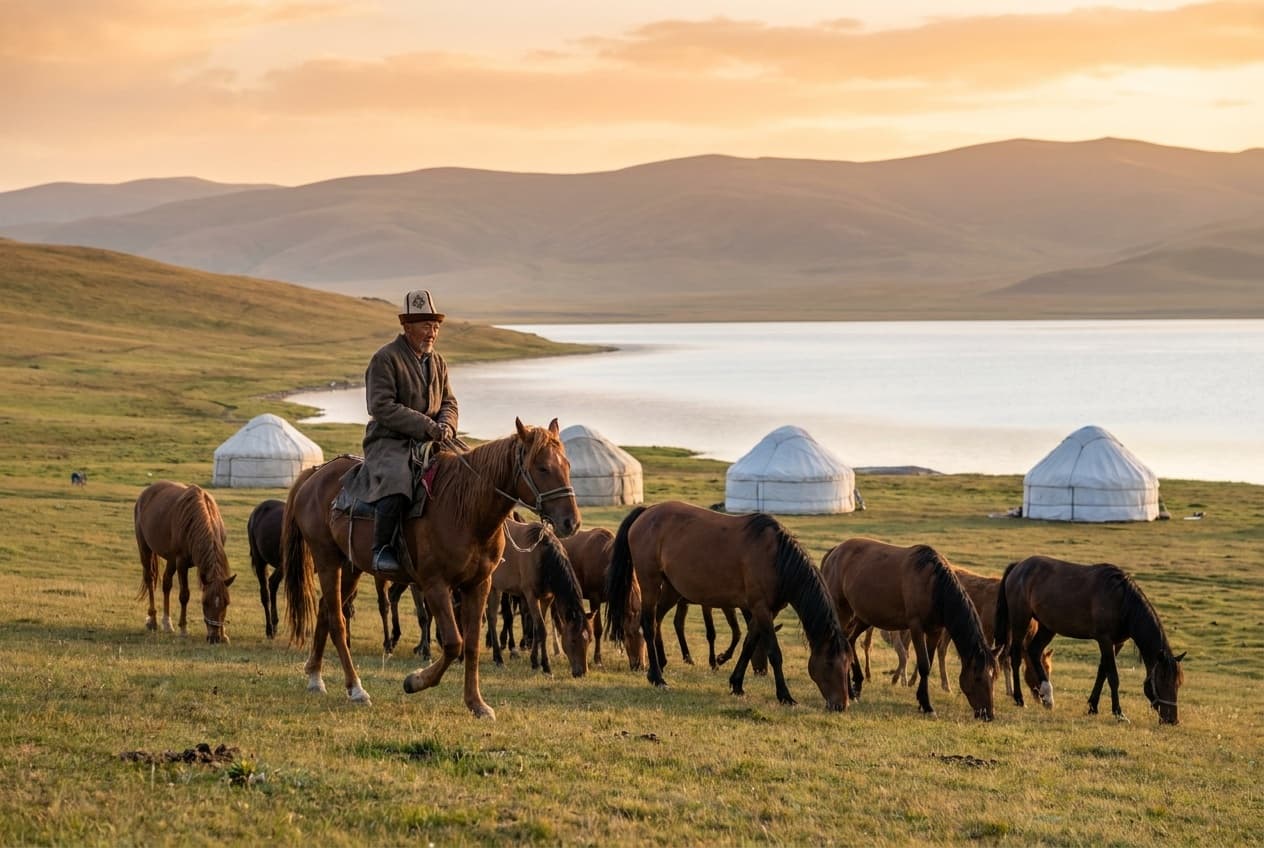
How to reach Song-Kul lake by car: the Kalmak-Ashuu and Moldo-Ashuu passes, when the road is open, why a 4x4 genuinely matters, staging in Kochkor, yurt-camp nights, altitude tips and a two-day plan from Bishkek.